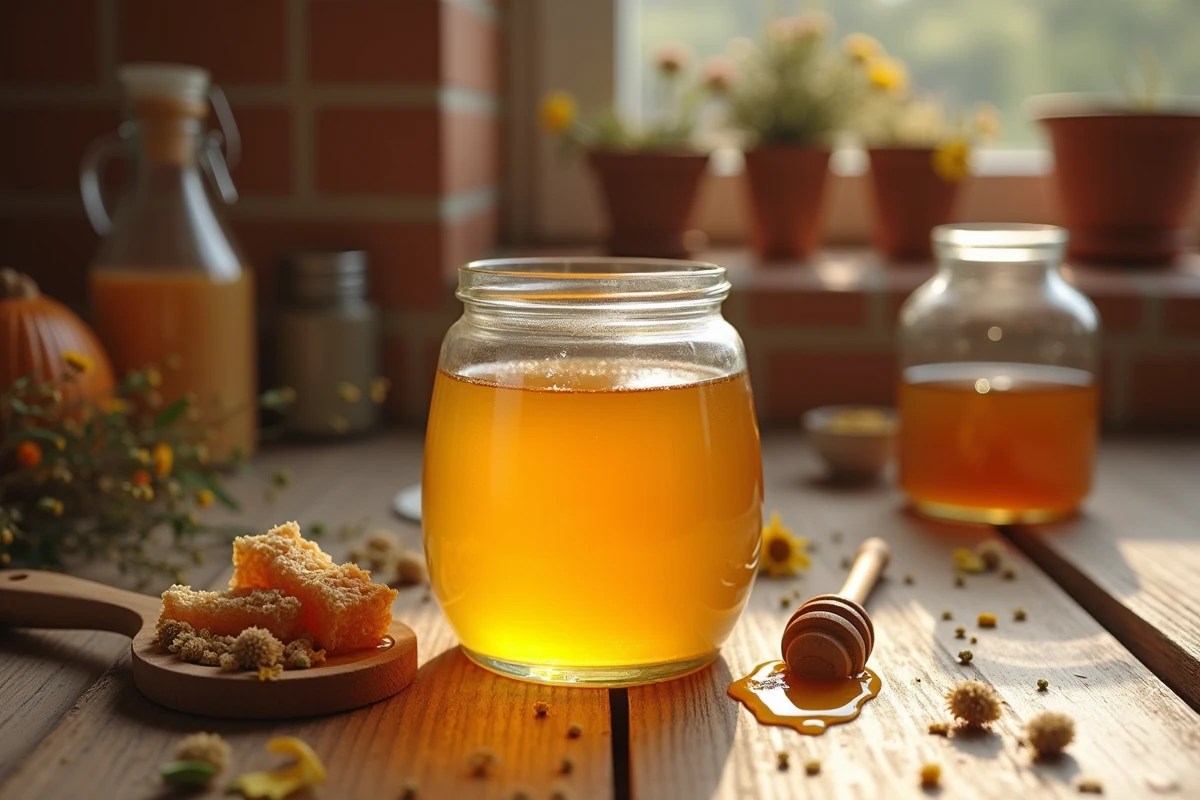
Honey has a positive image, associated with nature and the benefits of bees. When one decides to eliminate added sugars from their diet, the question of honey’s place inevitably arises. The answer largely depends on the definition of “added sugar,” and this definition is not universally agreed upon between official recommendations and common practices.
Honey and free sugars: what the WHO classification says
The World Health Organization has established a clear framework for defining sugars to limit. It uses the term free sugars, which encompasses all sugars added by the manufacturer or consumer, as well as sugars naturally present in honey, syrups, and fruit juices.
Honey is therefore explicitly included in this category. It doesn’t matter if it is artisanal, organic, or harvested through short supply chains: as soon as it is added to a drink or recipe, it falls within the scope of free sugars according to the WHO.
This classification has direct consequences. Recent protocols like “30 days without added sugars” (such as the one shared by Doctissimo in 2023, inspired by an EatingWell plan) exclude honey from the list of allowed foods, just like table sugar, syrups, and sodas. In contrast, whole fruits and complex carbohydrates remain on the menu. Knowing if one can consume honey without added sugar thus first requires clarifying the framework one imposes on themselves.

Glycemic index of honey: a value much less stable than one might think
One argument often used to justify the consumption of honey in a diet is that its glycemic index would be lower than that of white sugar. The reality is more nuanced.
The glycemic index of honey varies according to several parameters. Its texture (liquid or crystallized) and its composition of fructose and glucose significantly alter the glycemic response. A liquid honey, richer in glucose, can raise blood sugar levels more quickly than a creamy honey that is predominantly fructose.
Top Santé highlighted in 2023 that the texture and the fructose/glucose ratio modify the glycemic index of honey. In other words, talking about “the GI of honey” as a single value is misleading. Two honeys from different botanical origins can provoke very different metabolic responses.
What this changes in practice
For someone monitoring their blood sugar (in the context of pre-diabetes, type 2 diabetes, or simply aiming for energy stability), this variability poses a concrete problem. Without knowing the exact composition of the honey consumed, it is difficult to anticipate its effect on postprandial blood sugar levels.
An acacia honey, reputed to be richer in fructose, will not have the same impact as a sunflower honey. The available data do not provide a reliable grid by type of honey accessible to the average consumer.
No-added-sugar diet and honey: the confusion between “natural” and “allowed”
The most common misunderstanding rests on an implicit equivalence: natural = healthy = allowed. Honey is a natural product, not industrially processed, and its micronutrients (enzymes, antioxidants, trace minerals) are well documented.
The problem is that “without added sugars” does not mean “without carbohydrates”. Nutrition experts emphasize this distinction. The carbohydrates from whole fruits, legumes, or whole grains are not targeted by a no-added-sugar diet. Honey, however, falls into a gray area that each protocol interprets differently.
Here is what most strict programs for eliminating added sugars exclude:
- Table sugar in all its forms (white, brown, cane sugar)
- Syrups (agave, maple, glucose-fructose)
- Honey, including artisanal or organic, as soon as it is used as a sweetener
- Artificial and natural sweeteners (aspartame, stevia), depending on the protocols
- Alcohol, which contains fermented sugars
Whole fruits, whole grains, and plain dairy products are generally still allowed. Honey is classified with sweeteners, not with naturally sweet foods.
Should honey be completely banned from one’s diet?
The answer varies depending on the goal pursued. A therapeutic diet supervised by a healthcare professional (management of diabetes, anti-inflammatory protocol) will likely apply the strict definition of the WHO. Honey will then be excluded just like any other sweetener.
The approach of reduction rather than elimination
For a healthy person simply looking to reduce their sugar intake, the question is different. Replacing three tablespoons of white sugar in yogurt with one tablespoon of honey reduces the total amount of sweetener used. Honey is sweeter than table sugar by weight, which can mechanically lower the quantities.
This pragmatic approach has its limits. If the tablespoon of honey becomes an excuse to sweeten foods that didn’t need it, the benefit disappears. The main trap remains unconscious compensation: feeling entitled to add honey everywhere because it is “natural.”

Parameters to consider
- The type of honey: a honey rich in fructose will have a different glycemic impact than a glucose-dominant honey
- The quantity: half a teaspoon in a herbal tea does not have the same metabolic effect as three tablespoons in a cake
- The context of the meal: consumed with fibers, proteins, or fats, honey causes a glycemic spike that is mitigated compared to isolated intake
A no-added-sugar diet applied according to WHO criteria excludes honey. A less rigid dietary rebalancing may tolerate small amounts, provided that one does not confuse natural origin with absence of metabolic impact. The difference between these two approaches lies less in the honey itself than in the strictness of the framework one chooses to follow.