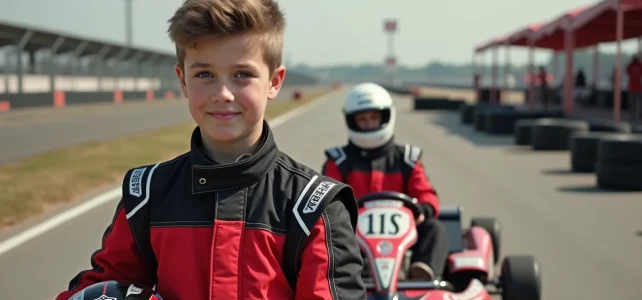
In motorsport, access to the circuit does not depend on a single legal age or a driver’s license. Road regulations do not apply on private circuits. What sets the limit is the combination of the type of machine, the format of the session, and the conditions imposed by each organizer. Understanding the age required in motorsport involves distinguishing three very different frameworks: off-road, leisure asphalt track, and licensed competition.
Private circuit and absence of road regulatory framework: what it really changes
On a closed circuit, the Highway Code does not apply. No license required, no BSR, no obligation to register the vehicle. The responsibility lies with the organizer, who sets their own admission criteria in their general sales conditions.
This means that each circuit and each format defines its own minimum age. On the same track, a children’s course may accept riders from 5 years old on adapted motorcycles, while a free riding day will require majority age. Two offers, two thresholds, one asphalt.
This delegation to organizers creates a fragmented landscape. No national text sets a minimum age for riding on a circuit outside of federal competition. The only constant: a signed parental authorization for any minor, and often a requirement for minimum height (around 1.25 m for children’s car courses with dual controls). To better understand the age required in motorsport, each discipline must be examined separately.
Motorcycle on asphalt circuit: real thresholds depending on course formats
Several motorcycle riding schools offer mini-rider courses starting from 5 years old on asphalt tracks, with small displacement motorcycles and qualified supervision. No competition license or permit is required. The child rides on a simplified track, at controlled speed, with an instructor nearby.
For teenagers, most facilities open their sessions from 14 years old on larger displacement machines, still without a license. We observe that the size and weight of the rider matter as much as age: a teenager who is too light or too small to reach the controls will be refused, even if they meet the age requirement.
Free motorcycle riding days
Track days generally set the bar at 18 years old. The rider often has to present a valid motorcycle license and their own machine, homologated or not depending on the events. Some organizers accept 16-17 year olds under strict conditions: parental authorization, federal license, and sometimes a requirement to ride in the slowest group.
Motocross and electric motorcycle for children: the circuit from 3 years old
Off-road pushes the limits much lower than asphalt. Motocross and electric motorcycle facilities welcome children from 3-4 years old on off-road circuits, with no license requirements. The machines used are lightweight electric motorcycles, with speed limiting and remote emergency cut-off.
This discrepancy between practice on private circuits and road-related obligations often surprises parents. On the road, a moped requires a BSR (AM license) from 14 years old. On a private circuit, a 4-year-old child can ride legally, under the responsibility of the organizer.
- Electric motorcycle for children on a closed circuit: accessible from 3-4 years old, no license required, speed limiting mandatory
- Mini-moto asphalt (supervised course): from 5 years old, qualified supervision, motorcycles adapted to morphology
- Free motorcycle riding on asphalt circuit: generally reserved for 18 years and older, motorcycle license often required

Car driving on circuit: karting, dual controls, and competition
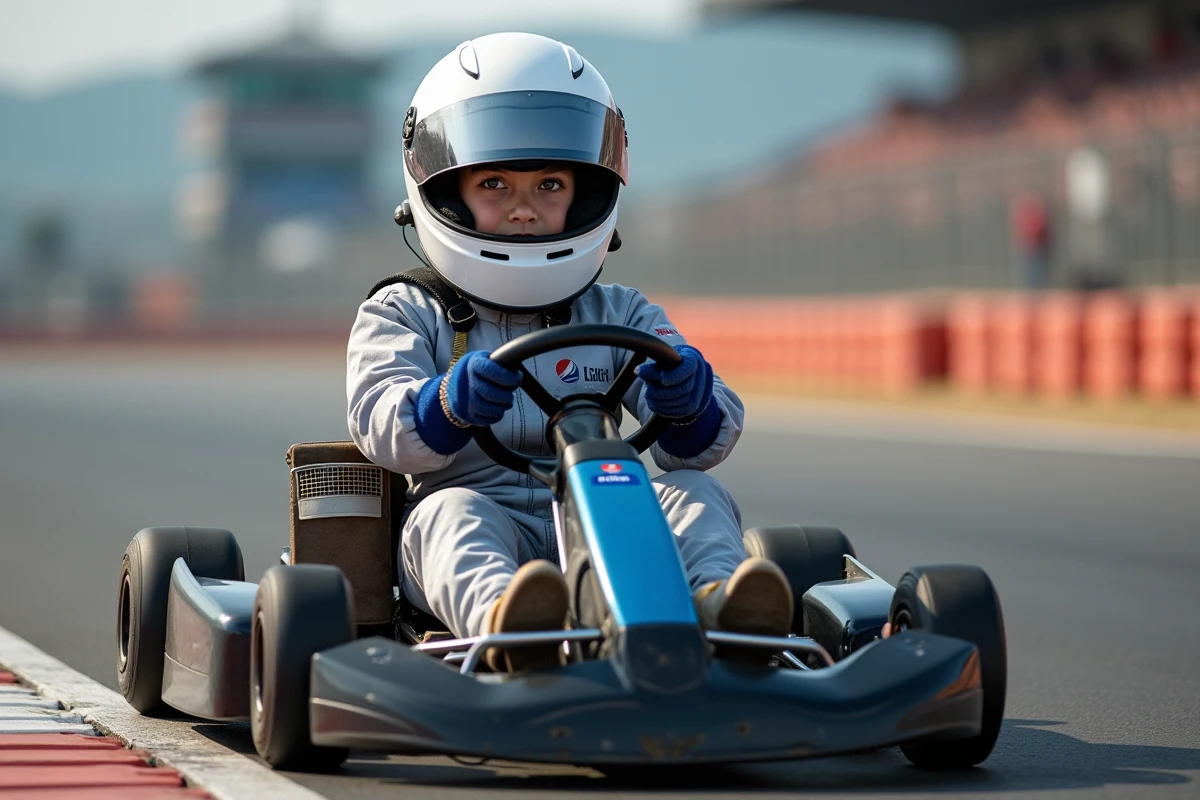
In karting, the most common discipline to start young, driving schools welcome children from 6-7 years old on adapted karts. This is the classic entry point into motorsport. The federal FFSport Automobile license (or equivalent) becomes necessary only for official timed events.
For car courses on circuit (sports cars like Mini Cooper S, Alpine, Porsche), the minimum age is around 8 years for organizers who offer dual control vehicles. The instructor maintains control of braking and steering. The minimum height required is around 1.25 m.
Passenger experiences
Speed experiences as a passenger, both in cars and motorcycles, sometimes allow younger ages. A child does not drive; they are a passenger of a professional driver. Some organizers accept passengers from 10-12 years old, again depending on their own criteria and with parental consent.
Federal motorcycle and car competition: the real regulatory thresholds
Licensed competition is the only framework where minimum ages are codified by a federation. In FFM motocross, the first competition licenses are issued from 6 years old. In speed on asphalt circuits, junior categories start later, often around 12-14 years depending on engine size.
In motorsport, competitive karting starts from 7 years with a license. Access to single-seaters and prototypes requires progressive ages set by the FFSA, with thresholds related to vehicle power.
- FFM motocross competition: license possible from 6 years old
- Motorcycle speed circuit: junior categories from 12-14 years depending on engine size
- FFSA competitive karting: from 7 years with a license
- Single-seaters and GT: progressive thresholds related to power, rarely before 15-16 years
We recommend contacting the circuit or the targeted organizer directly before any registration. The criteria published online do not always reflect the actual conditions of the day, which can vary depending on the weather, the number of participants, or the type of machine available. The only valid document remains the organizer’s general sales conditions, not a generic age found on a third-party site.