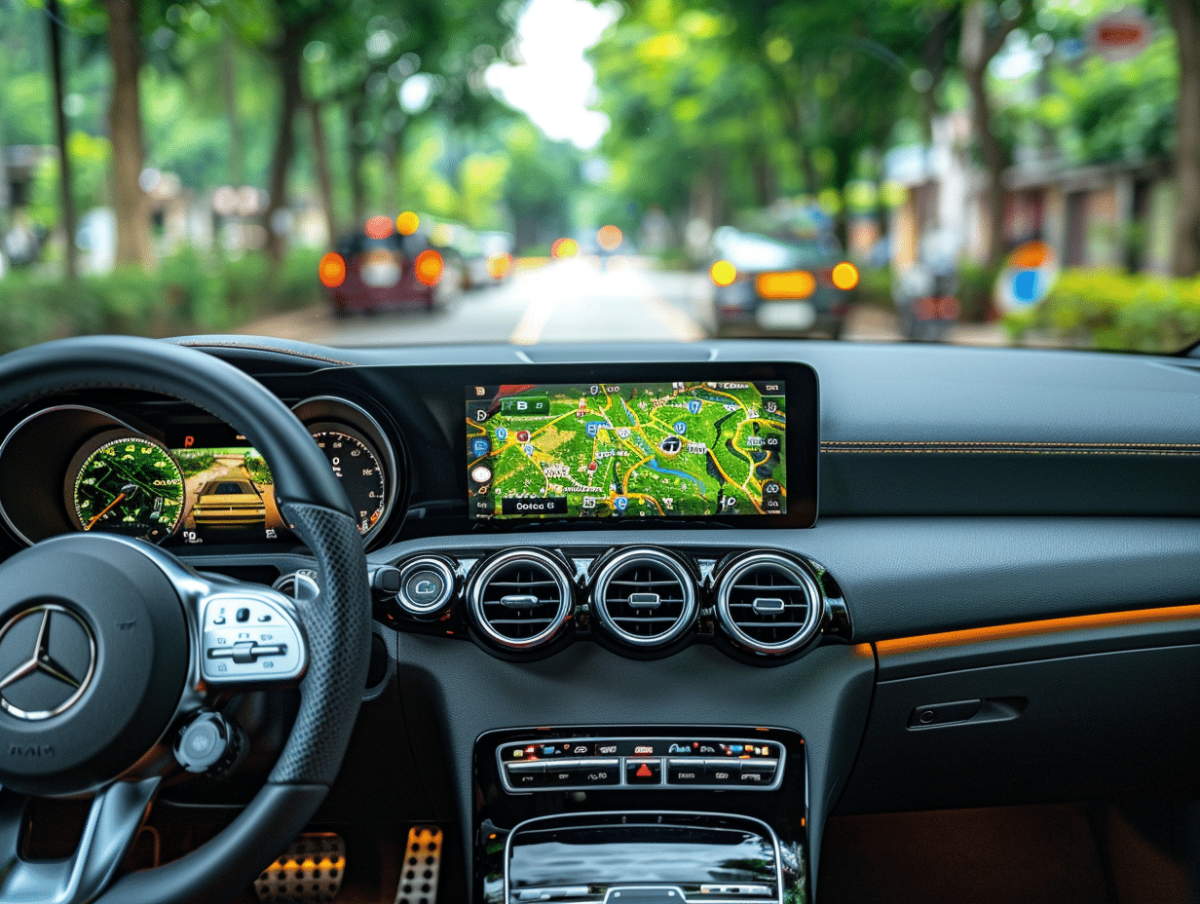
In the era of ubiquitous connectivity, our expectations for comfort and functionality in vehicles have skyrocketed. Multimedia equipment has become central to the driving experience. Indeed, advanced infotainment systems, with their touchscreens, built-in navigation, smartphone connectivity, and voice commands, transform the dashboard into a true digital control center. The seamless integration of these technologies in modern vehicles not only provides entertainment but also aims to enhance safety, interaction with the vehicle, and, by extension, overall driver satisfaction.
**The evolution of multimedia equipment in modern vehicles**
Embedded technologies in modern cars are the result of a silent revolution, driven by the automotive industry that constantly seeks to integrate innovations for the user’s benefit. These technologies, which include integrated audio and video systems for vehicles, no longer just entertain but aspire to increased interactivity, enhanced road safety, and an optimized driving experience.
The rise of autonomous vehicles and artificial intelligence, particularly with the involvement of major players like Google, reflects this ambition. Machine learning is utilized in the automotive industry to enable vehicles to learn from their environment and adapt accordingly, thereby reducing accident risks and improving driving efficiency.
While today, embedded technology in modern cars primarily contributes to connected mobility, tomorrow it will be the central pillar of autonomous vehicles, which are predicted to become the norm by 2030. These advancements reflect a paradigm shift where the car is no longer just a means of transport but a connected and intelligent personal space.
The convergence between road safety and embedded technologies is manifested through devices such as real-time analysis of driver behavior, fatigue detection, and traffic condition monitoring, illustrating the multiple benefits of this synergy. The automotive industry, by adopting machine learning and information technologies, is forging a new era where the car becomes an undeniably safer and more intuitive road partner.
**How does multimedia equipment enhance the driving experience?**
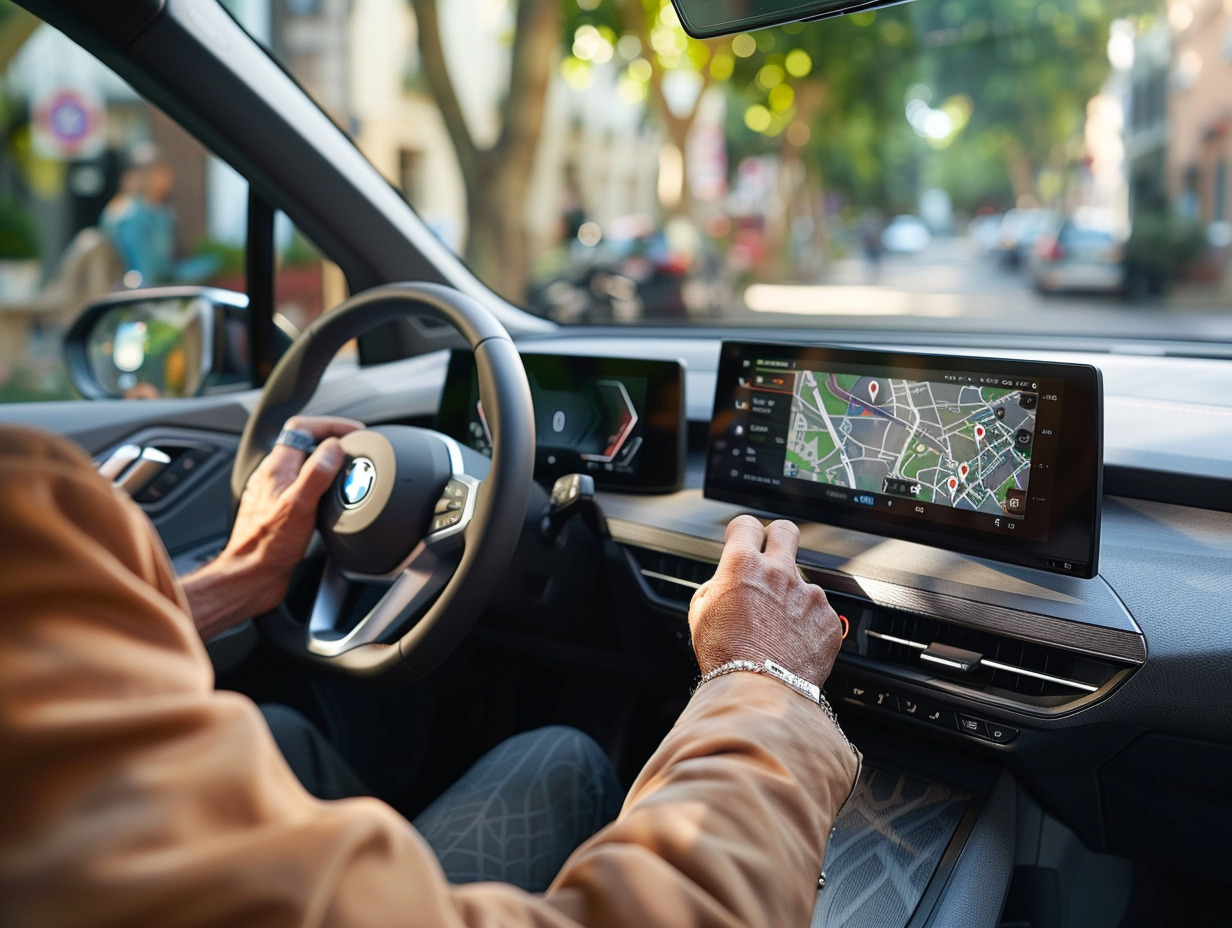
Connected mobility transforms cabins into true living spaces. Embedded technologies offer advanced navigation, communication, and entertainment services that, beyond comfort, contribute to the smoothness of driving. Voice-guided systems, intuitive touch interfaces, and gesture controls reduce distractions and allow drivers to stay focused on the road while enjoying optimal connectivity.
Road safety directly benefits from advancements in embedded technologies. Systems like adaptive cruise control and lane-keeping assistants work in concert with the driver’s reflexes, preventing accidents and improving responsiveness to unexpected road situations. These technologies, combined with increasingly precise sensors and cameras, build an active safety ecosystem, ensuring the protection of passengers and road users.
The driving experience of electric and hybrid vehicles is also reinvented by multimedia equipment. Multifunction displays show crucial data on energy consumption, remaining range, and available charging options, allowing drivers to optimize their usage and reduce their carbon footprint. This information, presented clearly and accessibly, encourages eco-friendly and economical driving.
Machine learning and artificial intelligence, by processing real-time collected data, personalize the driving experience. The driver’s habits are learned, anticipated, and integrated into the vehicle’s features, creating a harmonious interaction between man and machine. This synergy heralds an era where each journey becomes a tailored experience, shaped by technology in the service of well-being and efficiency.