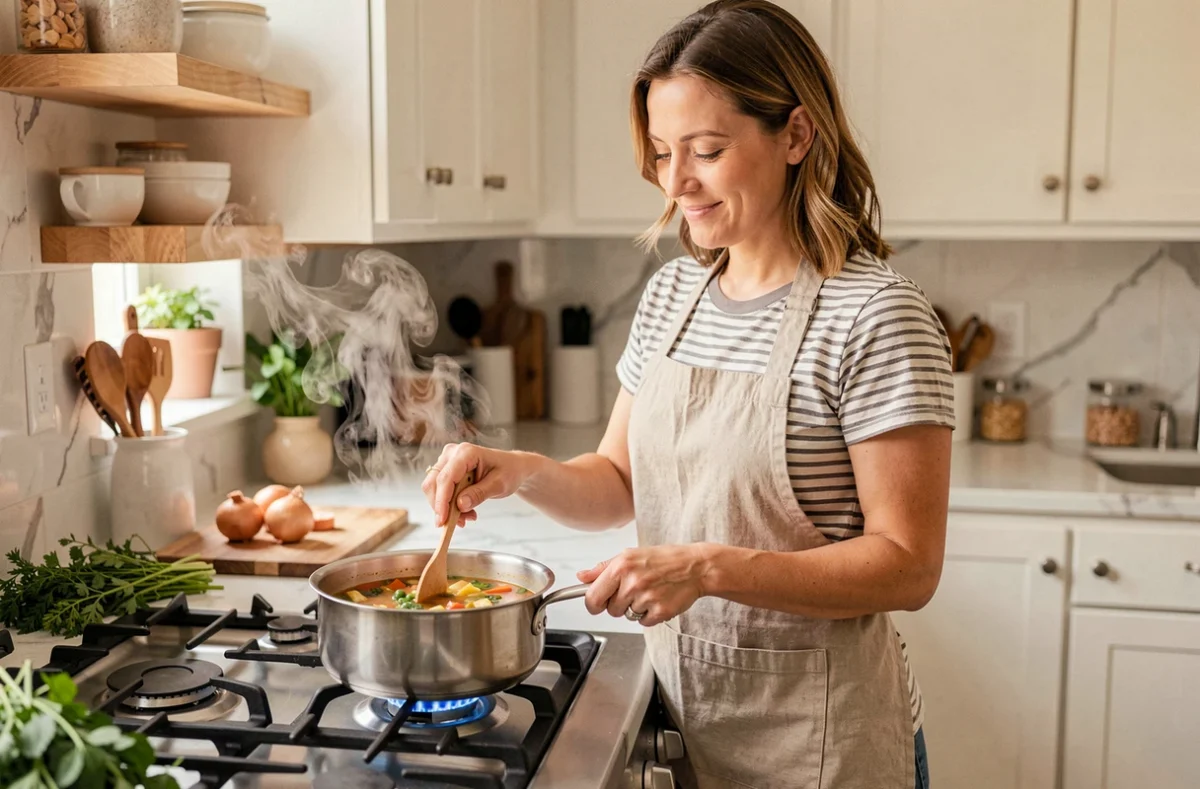
Daily family cooking is based on a principle that we consistently recommend: a common base adapted in portions and textures according to age. Preparing a single dish for the whole table, rather than a separate children’s menu, simplifies logistics and improves food acceptance among the youngest.
Weekly protein rotation: structuring family meals differently
Most family recipe articles line up chicken, ground meat, and ham without considering frequency. We observe that this approach creates avoidable nutritional monotony. Current guidelines encourage a clear alternation between animal and plant proteins throughout the week.
Specifically, legumes (red lentils, chickpeas, red beans) take over from meat in several meals. Fish appears twice a week, including once as fatty fish (sardines, mackerel, salmon). The rest is divided among eggs, poultry, and entirely plant-based dishes.
A coconut milk red lentil dahl with rice makes a complete dish that the whole family accepts. For toddlers, simply blend the preparation slightly. For adults, a squeeze of lime and a handful of cilantro elevate the dish without extra effort.
We invite you to explore gourmandisesetcie.fr and its recipes to find ideas that fit this protein rotation logic without complicating preparation.
A vegetarian couscous with chickpeas and seasonal vegetables works on the same principle. The semolina cooks in just a few minutes, the vegetables simmer in a spiced broth, and the dish feeds four people with pantry ingredients.
Cooking leftovers and neglected parts of vegetables
Home consumption is the main source of food waste in France, according to SDES data published on September 29, 2025. Family recipes should incorporate this reality instead of ignoring it.
Carrot and radish tops can be transformed into pesto or soup. Broccoli stems, often discarded, have the same nutritional value as the florets: finely chopped and sautéed with garlic, they complement any homemade pasta dish.
Transforming a leftover roast chicken into two meals
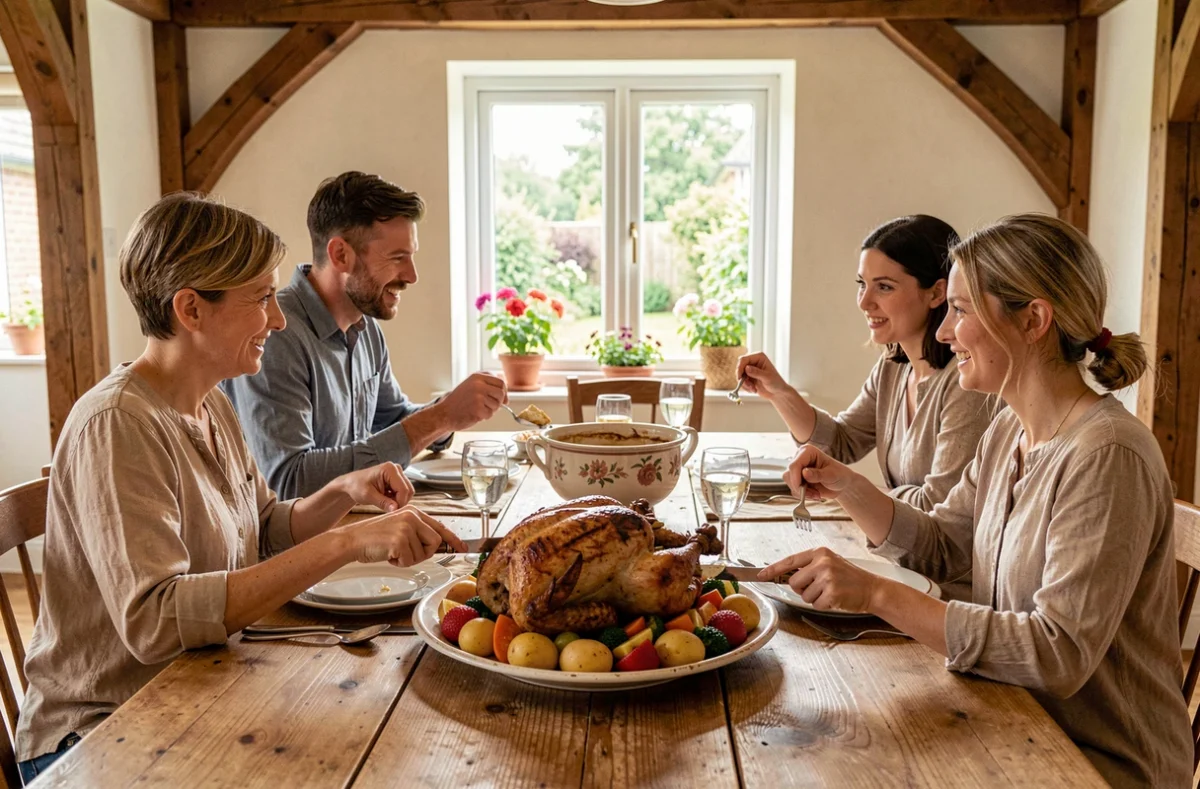
The carcass produces a concentrated broth in one hour of gentle cooking. This broth serves as a base for vegetable soup the next day. The remaining meat, shredded, fills wraps with yogurt sauce and raw vegetables.
A Sunday roast chicken thus fuels three distinct meals without the family feeling like they are eating the same thing. The key lies in changing the format: hot dish, then soup, then cold preparation.
- Potato peels, washed and seasoned with olive oil and rosemary, become homemade oven chips, perfect as a side or appetizer
- A bit of homemade tomato sauce can be frozen in individual portions in ice cube trays, ready to enhance a pasta dish or pizza base in minutes
- Overripe fruits (bananas, apples) serve as a base for a moist chocolate cake where added sugar is reduced thanks to the natural sweetness of the fruit
Family meal recipes under five euros
The food budget directly influences recipe choices. Dried legumes, eggs, seasonal vegetables, and basic starches (potatoes, pasta, rice) form a solid economic foundation.
A thick autumn vegetable soup with homemade bread costs very little per serving. Squash, leeks, potatoes, and an onion are sufficient. Adding grated cheese gratinates the dish and satisfies children.
Pasta gratin with vegetables: the dish that pleases everyone
Pasta gratin works as a universal format. Homemade béchamel (butter, flour, milk) costs almost nothing. The vegetables vary by season: zucchini and tomatoes in summer, leeks and mushrooms in autumn.
The technique that changes everything: precook the pasta one minute less than the time indicated on the package. They finish cooking in the gratin and absorb the sauce without becoming mushy. This short precooking guarantees a firm texture after baking.

Family batch cooking: preparing the week without spending Sunday on it
Poorly designed batch cooking discourages more than it helps. Spending four hours in the kitchen on Sunday to prepare five meals creates a chore, not a sustainable solution.
We recommend a modular approach: prepare two or three versatile bases instead of finished dishes. A large quantity of homemade tomato sauce, a batch of roasted vegetables, and a cooked grain (rice, quinoa, bulgur) can be combined differently each evening.
- Monday: rice, tomato sauce, and roasted vegetables in a bowl, topped with a fried egg
- Tuesday: roasted vegetables as a filling for wraps with fresh cheese
- Wednesday: tomato sauce as a base for homemade pizza on quick dough
- Thursday: stir-fried rice with leftover vegetables and soy sauce
Three base preparations generate four different meals in less than twenty minutes of finishing each evening. Children perceive variety, parents save time.
Storage and food safety
The prepared bases keep for three to four days in the refrigerator in airtight containers. Tomato sauce and cooked grains freeze well without notable quality loss. Roasted vegetables, on the other hand, lose their crunch after thawing: it’s better to consume them in the first few days.
Adjusting the amount of salt and seasoning at the time of finishing, not during initial preparation, allows each family member to customize their plate. Children often prefer milder flavors, while adults add spices, fresh herbs, or condiments.
Daily family cooking becomes more efficient when it relies on flexible bases rather than fixed recipes. A well-stocked pantry with legumes, starches, and canned tomatoes covers most situations, including evenings when time is short.