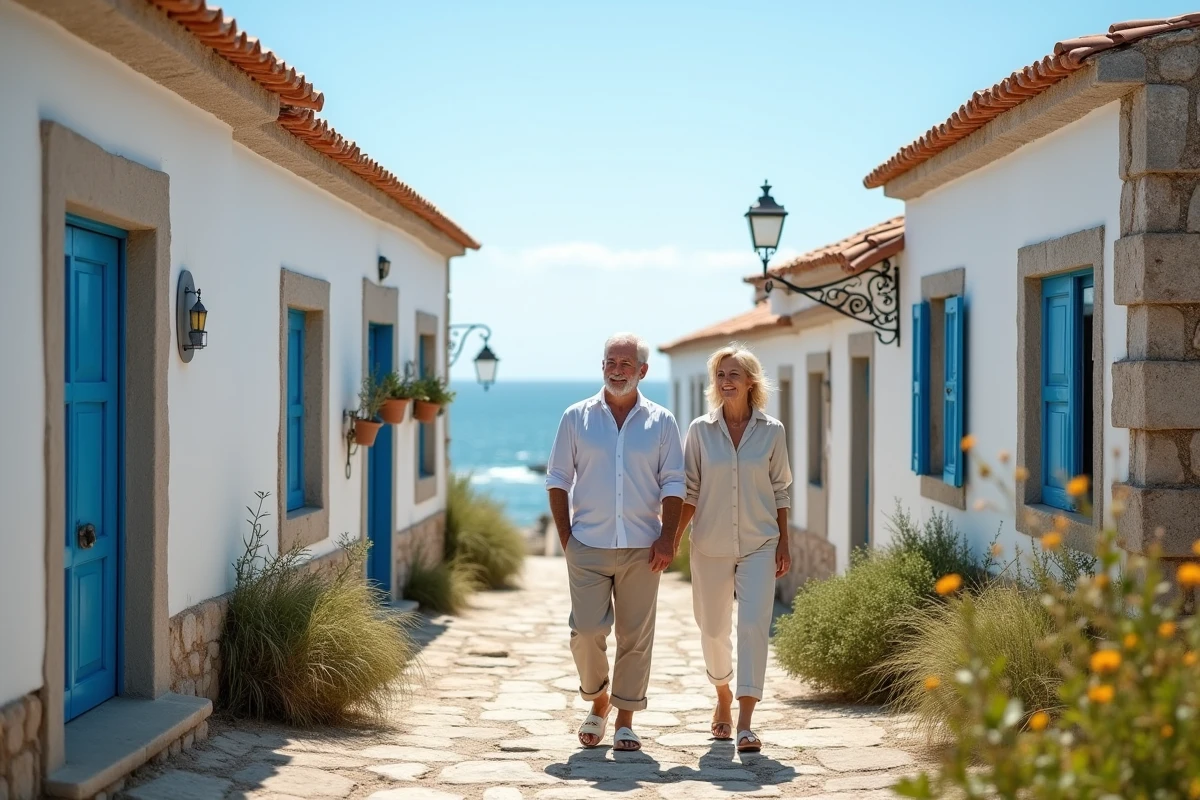
There are corners of Portugal where white stone, the sea, and memory come together to resist speculation. The Portuguese real estate market imposes specific restrictions on the purchase of traditional houses, particularly in coastal areas where demand often exceeds supply. Despite a growing appeal to international clients, some municipalities maintain quotas or preemption rights to preserve local heritage.
Prices show significant disparities between preserved villages and renowned seaside resorts. Transactions often involve longer administrative delays due to the special status of these properties and increased controls related to their renovation or extension.
What makes fishing houses in Portugal so sought after
Along the entire Atlantic coastline, the fishing house stands as a visual and cultural signature. Built to withstand wind, humidity, and the whims of the ocean, these homes are anything but ostentatious. Thick walls, small openings, a tiled roof, sometimes a patio or courtyard: every detail primarily serves the daily life of a people turned towards the sea. Nothing is left to chance, even the bright whiteness of the facades, sometimes highlighted with colorful friezes, which reflects the light and signals the proximity of the open sea.
Looking for a fishing house for sale in Portugal means aiming for a raw, unvarnished experience: the port, the alleys, the solidarity of a community whose daily life vibrates to the rhythm of the tides. The Portuguese real estate market has seen demand intensify, particularly from foreign buyers who appreciate the quality of life, attractive tax conditions, and mild weather. Prices per square meter vary greatly depending on the village or region, but rarity and authenticity drive up the value of these homes.
Buying one of these properties is betting on a living cultural heritage, while benefiting from a unique environment. Seasonal rental enthusiasts see potential, while others aim for a lucrative resale after renovation. In each village, these houses bear witness to a collective memory. Fishing, modest in economic terms, still permeates the architecture, habits, and atmosphere of the neighborhoods close to the port. Here, the stone retains the soul of the coast.
Which coastal spots to choose for an authentic and peaceful stay?
Along the Portuguese beaches, some fishing villages seem timeless. On the Algarve coast, there is a unique gentleness, where mild winters coexist with white houses and discreet coves. Ferragudo, Salema, Olhão, and Fuseta offer a lively local life, direct access to the beach, and a preserved atmosphere, far from the summer crowds.
Further inland, Nazaré and Peniche maintain a true maritime culture. Here, the fishing house faces the Atlantic Ocean, enveloped in foam and the cries of seagulls. Surfers and seekers of tranquility find their place, captivated by an authenticity that cannot be manufactured.
The Alentejo offers a different atmosphere: Vila Nova de Milfontes and Zambujeira do Mar combine cliffs, still wild beaches, and simplicity in construction. Costa Nova, not far from Aveiro, attracts with its striped facades and boats that recall the unbreakable bond with water.
In each of these villages, the welcome remains sincere. The locals willingly share their daily lives, marked by the return of fishermen and local festivals. To immerse oneself in the true life of the Portuguese coast, these fishing villages offer a rare alliance of authenticity, nature, and serenity.

From dream to reality: prices, procedures, and tips for successfully purchasing your property
Venturing into the purchase of a fishing house in Portugal means accepting to combine tradition with contemporary requirements. Prices can vary from simple to triple: offers can be found around €1,350/m² in Vila Praia de Âncora, while the Algarve easily exceeds €3,900/m², particularly in the most sought-after villages. This difference is explained by proximity to the coast, the condition of the building, and its potential as a second home or for rental investment.
Before any steps, it is necessary to obtain a Portuguese tax number (NIF), issued by the tax administration. This document is essential for any real estate transaction. It is also important to check the legal status of the property: some homes fall under usage rights (direito de uso), a special regime for houses in maritime or protected areas. This means temporary use, generally for twenty to seventy years, in exchange for an annual fee.
Engaging a real estate professional or a local lawyer is highly recommended. Technical inspection should not be overlooked: humidity, corrosion from sea air, and renovation standards require heightened vigilance and, at times, significant work. Consider evaluating profitability, whether through rental income, capital gains upon resale, or the quality of life offered. For foreign buyers, the market tension necessitates speed and foresight to avoid missing out on the ideal property.
Some key steps can help secure the acquisition:
- Carefully identify listings that match your criteria.
- Thoroughly examine the administrative and technical compliance of the property.
- Opt for professional assistance to avoid unpleasant surprises at purchase.
Acquiring this piece of Portuguese heritage means choosing to anchor oneself in a daily life where the sea is never far away, where every stone tells a living past. Considering the sea from one’s own terrace, isn’t that the beginning of a new story?