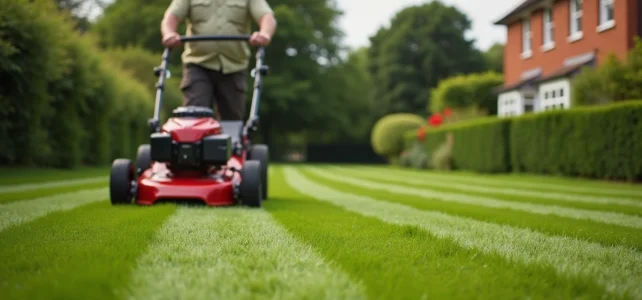
On a plot of 2500 m², choosing a mower is not just about the type of engine. The cutting width, the displacement of the petrol engine or the battery capacity, the collection system, and the garden’s topography determine both the mowing time and the cost over several seasons.
Comparing these technical parameters before purchase helps avoid underpowered equipment that wears out too quickly or oversized investments that sit idle in the garden shed.
Read also : How to Effectively Plan Your Road Trip with the Best Online Tools
Total cost of ownership of a mower for 2500 m²: petrol, battery, or robot
The purchase price represents only a fraction of the actual budget. Engine maintenance, fuel or electricity consumption, blade replacement, and overall lifespan alter the ranking of options over five to eight years of use.
| Criteria | Push petrol mower | Riding mower / tractor mower | RTK robotic mower |
|---|---|---|---|
| Initial investment | Moderate | High | High to very high |
| Engine maintenance | Oil change, filter, spark plug each season | Oil change, belt, filter | Almost none (blades to replace) |
| Energy | Fuel (variable cost) | Fuel | Electricity (low cost) |
| Mowing time per session | Long (multiple passes) | Reduced (wide cutting width) | Autonomous (frequent mowings) |
| Estimated lifespan | Several seasons with maintenance | Long if regularly maintained | Long, battery to monitor |
On this surface, the robotic mower has the lowest energy cost thanks to short and repeated mowing cycles. The push petrol mower remains the cheapest option to purchase, but the time spent on each mowing and engine maintenance costs add up year after year.
See also : How to know if a transfer certificate has been registered by the ANTS?
When trying to determine which mower for a 2500 m² plot offers the best investment-to-lifespan ratio, the answer mainly depends on the number of annual mowings and the regularity of mechanical maintenance.
Cutting width and engine displacement: technical thresholds for a 2500 m² plot
The cutting width determines the number of passes needed to cover the entire lawn. The narrower it is, the longer each session takes, which accelerates user fatigue and mechanical wear.
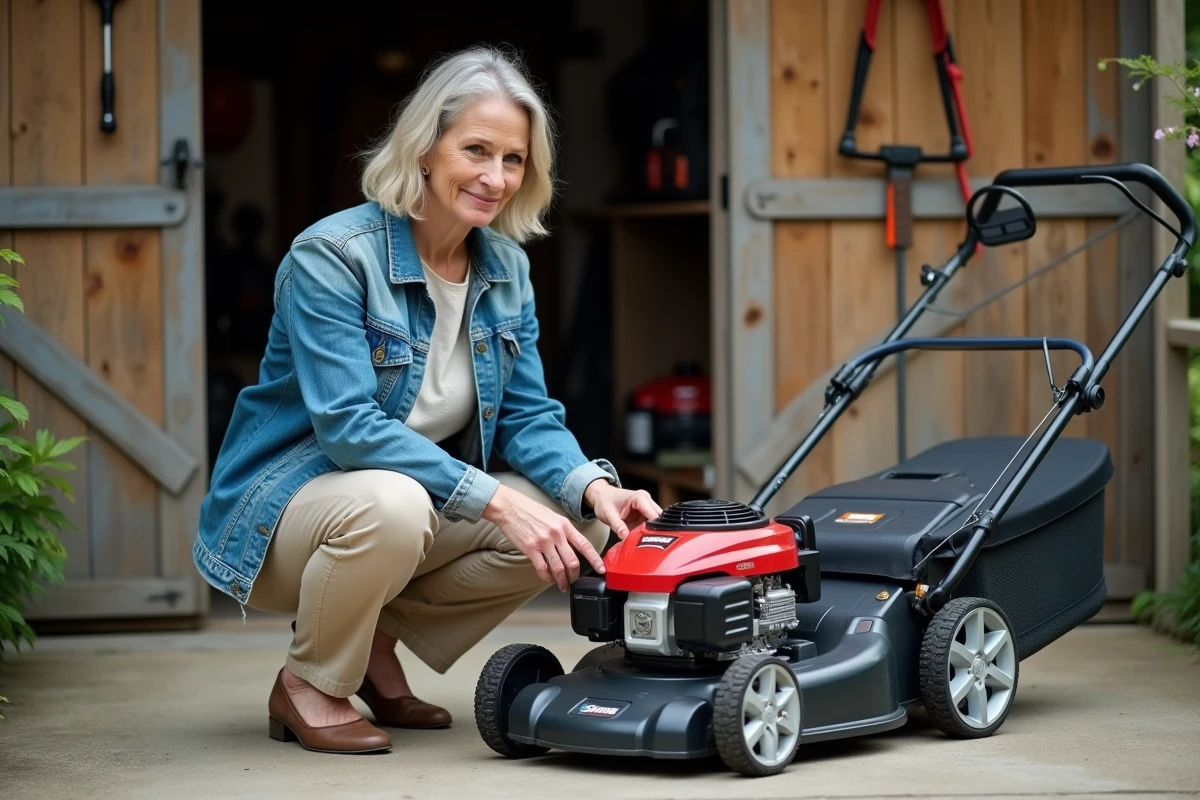
Push or towed petrol mower
For a surface of this size, a cutting width of at least 50 cm is the functional minimum. Below that, the number of passes makes sessions too long. The engine displacement must follow suit: a block that is too small struggles in tall grass and consumes more.
The collection system also plays a role. A large-capacity bag reduces trips to empty it. Mulching, which shreds the grass and redistributes it on the soil, eliminates this constraint and nourishes the lawn. Several recent petrol models combine both functions.
Riding mower and tractor mower
The riding mower becomes relevant when the area exceeds 2000 m², especially if it is generally flat and open. The cutting width often exceeds 90 cm, which divides mowing time by two or three compared to a push mower.
However, in a garden fragmented by flower beds, trees, or steep slopes, the maneuverability of a standard riding mower decreases. Front-cutting models (like riders) then offer an advantage for navigating obstacles.
Wireless perimeter robotic mower: the game changes for large gardens
Next-generation robotic mowers do without buried perimeter wires. Navigation relies on RTK GNSS, LiDAR, or camera vision, eliminating the heaviest installation constraint on a 2500 m² plot.
Burying a guide wire around a perimeter of this size previously represented several hours of work (or installation costs by a professional). RTK models eliminate this barrier. Feedback from users of Kress RTK robots on similar surfaces confirms a consistent mowing result, with the terrain described as “always neat” despite a higher initial investment.
- RTK GNSS offers centimeter-level accuracy and is suitable for open areas with few tall obstacles.
- LiDAR and camera vision manage wooded gardens or partially covered areas better.
- Most of these robots operate with short daily mowings, maintaining a constant grass height without collection.
A cable-free robot reduces installation time from several hours to a few minutes of setup via an app. This gain partly justifies the price difference with a traditional wired robot.
Terrain topography and mowing constraints: adapting the choice to the reality of the garden
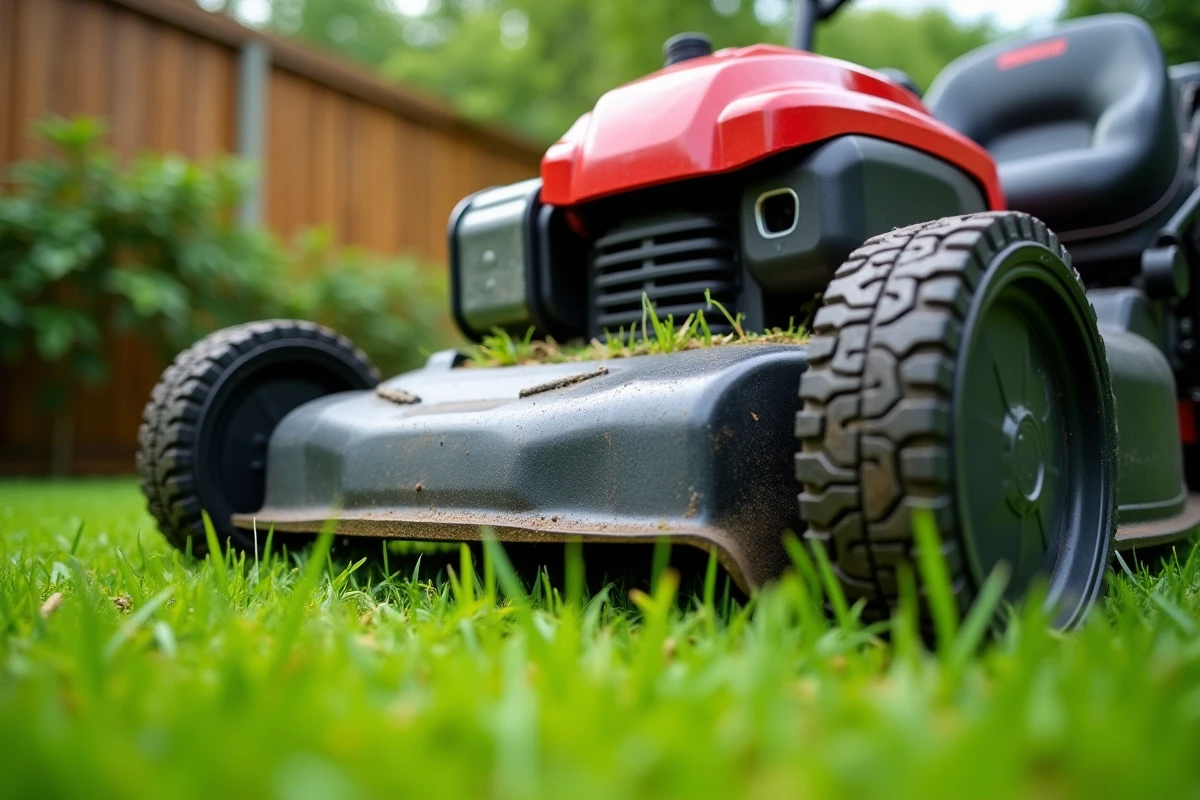
A 2500 m² plot that is rarely flat and rectangular changes the hierarchy of options. Slopes, narrow areas between the house and the fence, flower beds, and fruit trees impose constraints that a mower’s technical sheet does not always mention.
- Slopes over 20%: most riding mowers lose traction. A robot with slope management or a push mower remains safer.
- Narrow areas (passages less than one meter): the riding mower cannot pass, the robot may require specific guidance, and the push mower remains the most flexible.
- Very wooded terrain: mulching under trees promotes leaf decomposition, but collection may be preferable in spring to avoid smothering the grass.
The best mower for 2500 m² is the one that matches the actual terrain relief, not just its area. A gently sloping and open garden will lean towards a riding mower or RTK robot. A rugged and partitioned garden will favor a towed petrol mower with a good cutting width, possibly complemented by a robot for accessible areas.
The final choice relies on three measurable data: the effective area to be mowed (removing terraces, flower beds, paths), the maximum slope, and the number of fixed obstacles. These three parameters, crossed with the acceptable annual maintenance budget, designate the most suitable mower category without leaving room for chance.