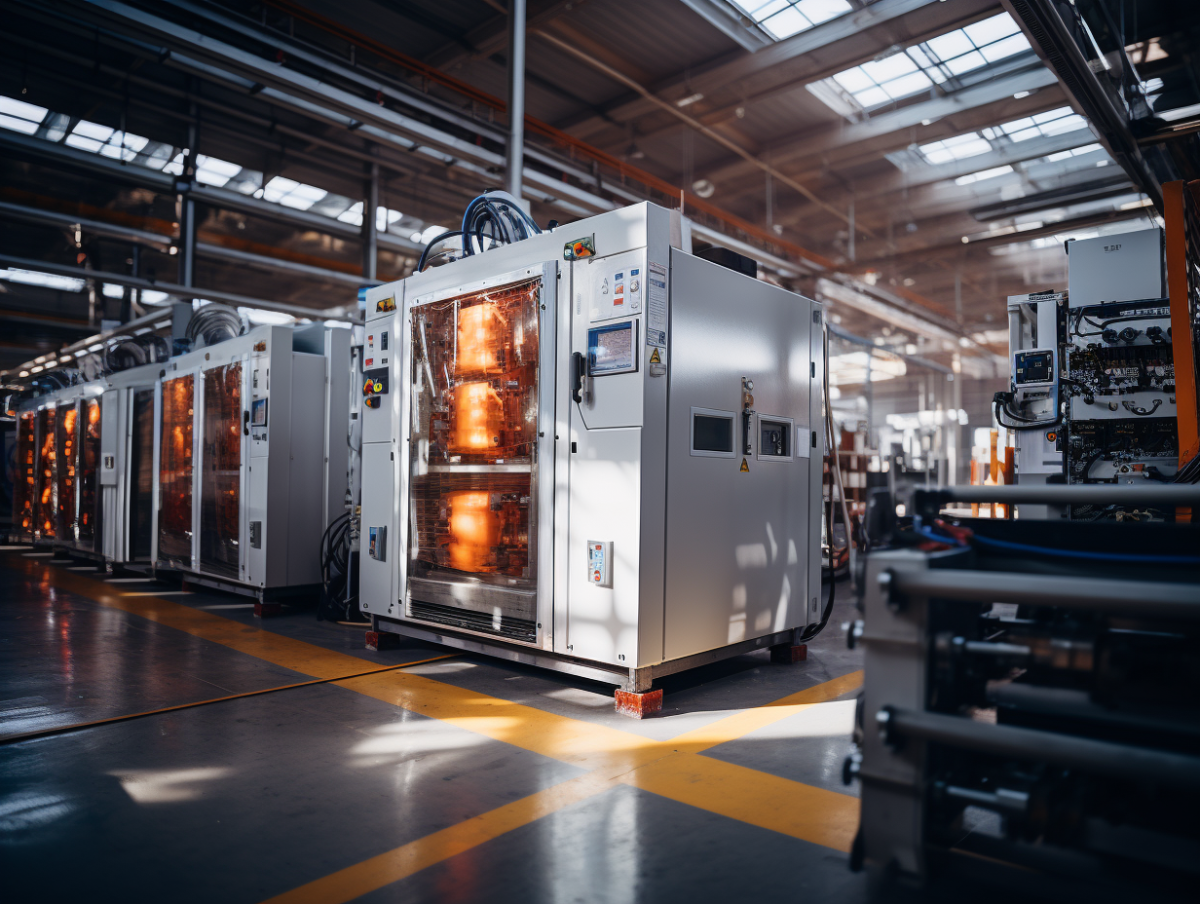
The world of industrial electrical equipment is a fascinating and complex field, where innovation and technical rigor are paramount. Through an in-depth exploration, one can discover the diversity and sophistication of the systems that power installations of various sizes, from factories to critical infrastructures. Components such as transformers, circuit breakers, cables, and control panels are the pillars upon which the safety and efficiency of modern industry rely. Understanding their operation, maintenance, and technological evolution is essential to ensure uninterrupted and reliable production.
The Fundamentals of Industrial Electrical Equipment
In the industry, industrial electrical equipment is subjected to demanding environmental conditions, often well beyond ordinary constraints. It is in this context that NEMA certification (National Electrical Manufacturers Association) takes on its full significance. Founded in 1926, this North American trade association represents manufacturers of electrical and electronic products, promoting uncompromising quality and safety standards.
NEMA certification ensures the safety of industrial equipment by covering a wide range of products and subjecting each product to rigorous resistance testing. The adoption of this certification by manufacturers is a mark of reliability, ensuring protection against the elements and reducing the risk of incidents. TGBT rooms (Tableau Général Basse Tension), the pulsating heart of a site’s electrical supply, must meet strict criteria, often defined by NEMA standards, to withstand electrical and mechanical stresses.
Another fundamental pillar of industrial electrical equipment is the IP protection rating, developed by the International Electrotechnical Commission (IEC). This international classification system evaluates the level of protection of an electrical or electronic product against the intrusion of solid and liquid bodies. The industry demands equipment that complies with high IP ratings, synonymous with robustness and watertightness.
Understanding entities such as NEMA and IEC, as well as the certifications and standards they develop, is fundamental for any professional in industrial electrical equipment. Products that conform to these standards, the NEMA labeled products, are built with quality materials and rigorous manufacturing techniques, thus ensuring a level of safety and performance suited to the specific requirements of the industry.

Applications and Innovations in Industrial Electrical Equipment
In the industrial field, the applications of electrical equipment are as diverse as they are vital. Take the NEMA classification table: it methodically details the different levels of protection offered by NEMA certification for electrical and electronic products. From process automation to energy monitoring, NEMA labeled products fit into scenarios where reliability is not an option, but a requirement. These products, with their certified robustness, drive critical systems such as production lines, water treatment equipment, and transportation infrastructures.
Innovation in this sector continually pushes the boundaries of current technology. The focus is on sustainable development and energy efficiency, all without compromising the safety of the equipment. Advanced materials and innovative manufacturing techniques are at the heart of this revolution, leading to the creation of increasingly efficient and environmentally friendly NEMA labeled products. These advancements enable industries to reduce their carbon footprint while optimizing their energy consumption, a double benefit for businesses and the planet.
Understanding the impact of industrial applications of these electrical equipment is essential. They are the invisible pillars that support modern infrastructures, ensuring continuous and secure operation. NEMA labeled products embody this alliance between innovation and safety, between progress and sustainability. Industries equip themselves not only to meet current demands but also to anticipate future challenges, armed with cutting-edge electrical equipment.