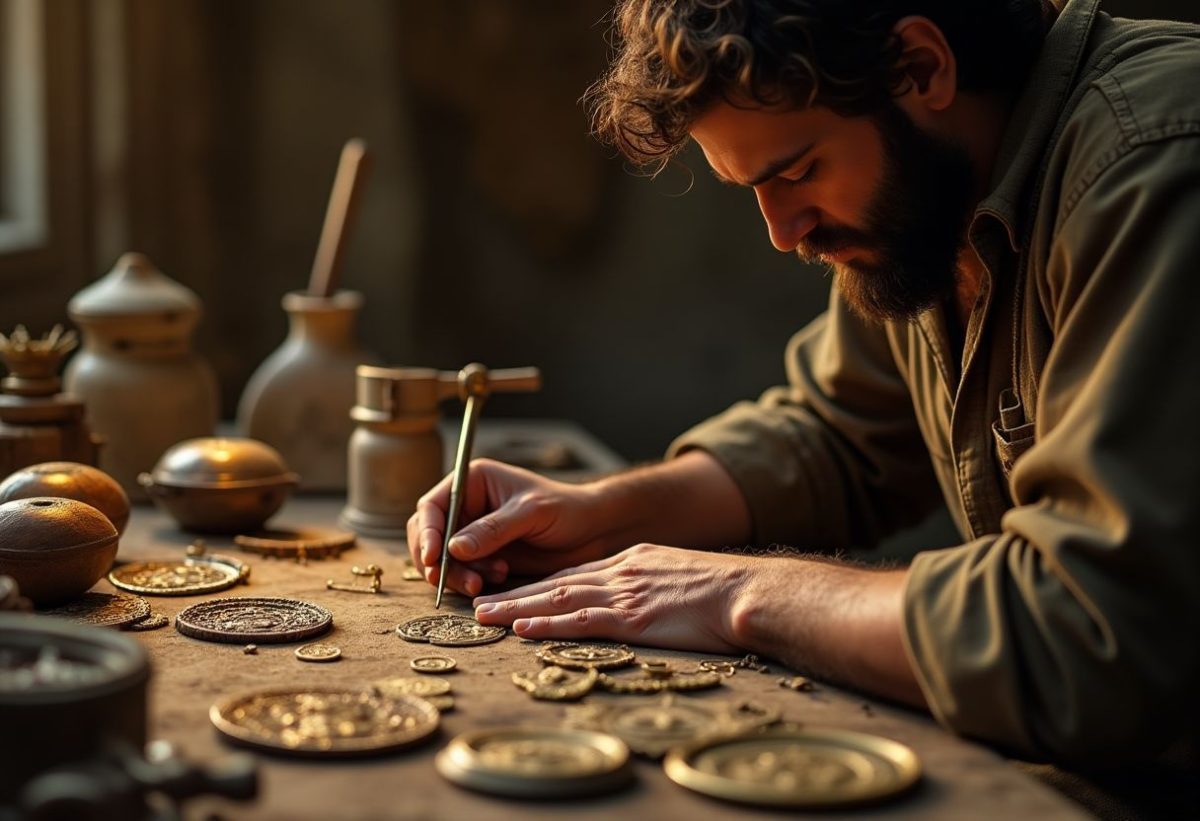
The precious medals, symbols of recognition and beauty, have traversed the ages while retaining their mystery and brilliance. Their history is woven from tales of heroes, artists, and enthusiasts. Whether to immortalize a significant event, celebrate a sporting achievement, or express unconditional love, these captivating works of art embody ancestral craftsmanship. Their refined designs and noble materials make them timeless treasures.
The origins and evolution of the precious medal
Medals have a rich history, dating back thousands of years. They have evolved through the ages, reflecting social, political, and artistic changes.
The earliest traces of medals date back to Antiquity. The Romans, in particular, used these objects to reward deserving soldiers. These early medals were not made of precious metals, but they already carried the idea of value and recognition within them.
During the Renaissance, the use of medals diversified. They became pieces of art, often sculpted by renowned artists, intended to commemorate important events or honor personalities. Precious metals, such as gold and silver, were increasingly used, adding value and prestige to these objects.
The modern era sees the emergence of sports medals, associated with international competitions. A symbol of success and excellence, the precious medal becomes an emblem for athletes around the world.
The design evolves to include various motifs, reflecting the spirit and values of the competitions.
The manufacturing techniques of precious medals
Each precious medal is the result of meticulous and complex work, combining ancient techniques and modern innovations.
- Engraving: Engraving is one of the oldest techniques and involves incising patterns onto the metal. This requires great precision and deep expertise.
- Casting: This method involves pouring molten metal into a mold. It is often used to create relief pieces with intricate details.
- Enameling: A decorative technique where colored enamel is applied to the surface of the metal and then fired to create vibrant and durable patterns.
- Polishing: The final step, polishing provides a smooth and shiny surface, highlighting the patterns and inscriptions.
The cultural and symbolic impact of precious medals
Medals are not just simple material objects. They carry deep symbolism, influencing cultures and societies.
In several cultures, precious medals are perceived as talismans. They are believed to bring luck, protection, and prosperity to their holders. This belief is particularly strong in certain Asian traditions, where medals are integrated into rituals and ceremonies.
Medals also play an important role in sports, where they are the ultimate symbol of success. Winning a gold medal at the Olympic Games, for example, is the pinnacle of an athlete’s career, a dream that embodies years of training, perseverance, and sacrifice.
In a more personal context, they often serve as silent witnesses to significant moments in life, such as births, weddings, or anniversaries. They are then engraved with sweet words or significant dates, transforming each piece into an invaluable emotional treasure.
The materials and design of precious medals
The choices of materials and design determine the aesthetic and symbolic value of a precious medal.
Precious metals, such as gold, silver, and sometimes platinum, are commonly used in the manufacturing of medals. Their brilliance and durability make them perfect choices to symbolize importance and honor.
Precious stones, such as diamonds, rubies, or sapphires, are sometimes embedded in medals to add an element of luxury and exclusivity. Their color and brilliance captivate the eye and add an additional dimension of majesty.
The design of a medal must be both aesthetic and functional. The engraved patterns should be easily readable and accurately represent the event or person being honored.
Artists often work closely with historians or sponsors to ensure that every detail is meaningful.