
A user who suffers from mid-afternoon energy slumps starts drinking noni juice every morning for three weeks. They notice a boost in vitality and sleep better, then switch brands and no longer get the same effect.
This kind of story comes up often in consumer reviews of noni juice, and it raises a practical question: which parts of these accounts reflect a real effect of the fruit, and which may be due to other factors?
Why the same noni juice can have different effects depending on the brand
People sharing their experiences rarely mention where the fruit came from or how it was processed. A review of human studies published in 2018 notes that the research examined involved noni juice from French Polynesia. The fruit’s composition varies depending on the growing region, its ripeness at harvest, and the processing method (pasteurization, fermentation, concentration).
So two juices labeled “organic noni” may contain very different nutrient profiles. When a consumer reports better sleep or digestion, the specific product they used matters just as much as the fruit itself. Several reviews on Jus de Noni illustrate how much products can vary from one brand to another, with sometimes conflicting experiences of what is, on paper, the same fruit.
This is something online retailers have little incentive to highlight: the source and preparation method largely determine the results. Juice made from fully ripe fruit harvested in Polynesia, cold-pressed and undiluted, is not comparable to a reconstituted concentrate made with water and sugar.

Effects of noni juice on energy and sleep: what users report
Two themes dominate the most common feedback: a boost in daytime energy and better sleep quality. Users, including those cited in discussion groups, mention fewer energy slumps, less constipation, and falling asleep more quickly.
The gap between personal experience and clinical data
A randomized trial was conducted with 132 smokers who drank noni juice daily for 30 days. Researchers observed changes in certain blood markers, but no definitive clinical benefit was established. The study was funded by the manufacturer of the product tested, so its results should be interpreted with caution.
The positive experiences reported by many consumers are not necessarily unfounded. Noni contains documented antioxidant compounds. The placebo effect also plays a role, and that is not a criticism: when you take an active approach to natural health, paying attention to your body can have measurable effects on your perceived well-being.
What varies from one consumer to another
Daily dosage, when it is taken (on an empty stomach or with a meal), and how long it is consumed all vary from one account to another. Some people drink 30 ml a day, while others take twice as much. Without a standardized protocol, comparing two experiences is difficult.
- Tolerance for the taste affects consistency: noni has a strong, fermented flavor that many find off-putting, leading them to dilute the juice in a smoothie or stop drinking it altogether.
- Initial health affects how people feel: someone with chronic fatigue is more likely to notice a change than someone who is already in good shape.
- Consumption ranges from a few days to several months, and reported effects generally appear after two to three weeks of regular use.
Practical precautions before drinking noni juice
Enthusiastic testimonials often overlook the limitations and risks. Two points deserve particular attention.
Potassium content and medication interactions
Noni is naturally high in potassium. For people being treated for kidney failure or taking medications that raise blood potassium levels, this potassium content may pose a real problem. This information is almost never mentioned in consumer reviews, even though it affects whether the product is safe for some people.
Reports of liver problems and the EFSA’s position
Cases of hepatitis have been reported in consumers of noni-based products. In 2006, the EFSA concluded that there was no convincing evidence of a causal link between the Tahitian noni juice studied and these cases. This conclusion does not cover every noni product on the market, and it does not mean that the risk has been ruled out for other formulations.
- Anyone with a history of liver problems should consult a doctor before starting a course of noni juice.
- Noni-based dietary supplements are not subject to the same controls as medicines: quality varies considerably from one product to another.
- Combining noni juice with other supplements (turmeric, St. John’s wort) may affect how certain medications are absorbed.
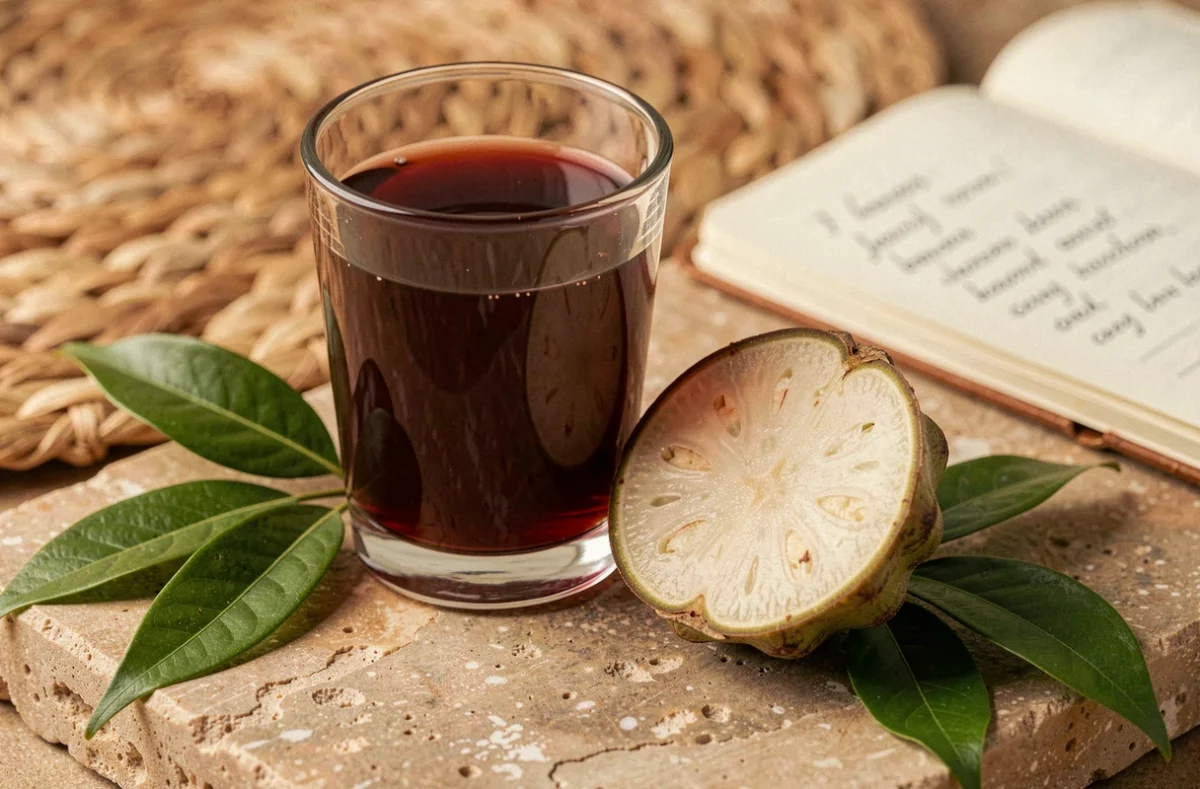
Organic noni juice: how to read consumer reviews critically
When you browse online reviews of organic noni juice, recurring patterns emerge. Positive reviews almost always mention energy, sleep, or digestive comfort. Negative reviews focus on the taste or on not noticing any effects after a few days.
A single testimonial, however detailed, is not proof of effectiveness. It is one piece of evidence to consider alongside other reviews and the available data. Prioritizing reviews that specify the brand, dosage, and duration makes it easier to assess how relevant the experience is.
The most satisfied consumers are often those who have stuck with a course of at least three weeks using a specific product, noting how they feel each day. Those who are disappointed have generally tried the juice for only a few days, sometimes diluted so much that the concentration of active compounds is reduced.
Noni juice is neither a miracle cure nor a product without merit. Its antioxidant and micronutrient content is documented. Its perceived day-to-day effects depend on the product chosen, the dosage, and the person’s initial health. Keeping these three factors in mind is what separates an informed purchase from one made on impulse.