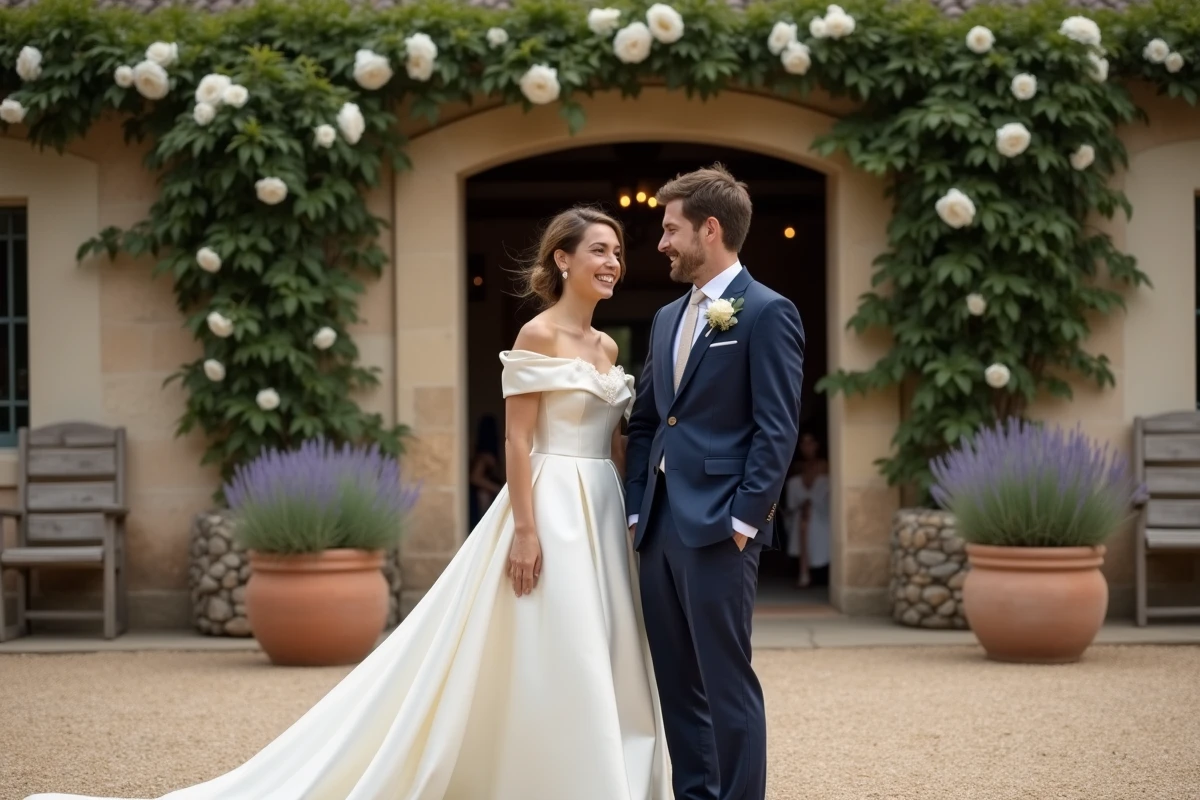
Organizing a wedding in 2025-2026 means navigating longer booking timelines, diversifying ceremony formats, and contracts with service providers that have significantly changed since 2020. What are the real differences between a classic wedding and the new formats that are gaining ground? This article compares current trends to identify where the real trade-offs lie.
Classic Wedding or Micro-Wedding: A Comparison of Current Formats
The choice of format determines the budget, logistics, and guest experience. Two models dominate wedding preparations today: the traditional reception (80 to 150 guests, dedicated venue, multiple service providers) and the intimate micro-wedding (fewer than fifty guests, tight setting, controlled budget).
| Criteria | Traditional Wedding | Intimate Micro-Wedding |
|---|---|---|
| Number of Guests | 80 to 150+ | Fewer than 50 |
| Venue Booking Timeline | 12 to 36 months depending on the region | 6 to 12 months on average |
| Weight of Catering Budget | Main item (often over 40% of the total) | Proportionally reduced, alternative options possible |
| Date Flexibility | Saturday almost mandatory in high season | Weekdays or off-season more accessible |
| Logistical Footprint | Heavy coordination (DJ, photographer, florist, officiant) | Fewer providers, simplified organization |
| Personalization | Depends on the venue and number | High, every detail can be tailored |
The rise of micro-weddings is no longer just a post-Covid effect. French specialized magazines continue to document it in 2025, with couples choosing this format out of conviction: authenticity, controlled budget, and reduced ecological footprint. The micro-wedding is not a budget wedding; it is a deliberate choice.
To explore ceremony options and compare service providers, the website wedding-news.net for weddings gathers detailed sheets on each step of the organization.
Postponement Clauses and Service Provider Contracts: What Has Changed Since 2020
The massive postponements of weddings in 2020-2021 have left a lasting mark on the contractual practices of the industry. Reception venues and caterers now include postponement clauses without fees or with reduced penalties, where a pre-Covid contract often imposed the total loss of the deposit in case of a date change.
This evolution is not trivial. The legal advice sheets published in recent years emphasize the systematic verification of three points before signing:
- The force majeure clause: does it cover pandemics, severe weather, transport strikes? A contract that does not explicitly mention these cases leaves the couple without recourse.
- Postponement conditions: required notice period, number of allowed postponements, potential extra costs if the new date falls in high season.
- Partial refund terms: in case of definitive cancellation, what percentage of the deposit is refunded and within what timeframe.
Couples who actively compare these conditions before signing gain a real negotiation lever. A provider who refuses any flexibility clause sends a signal: either their schedule is full enough not to need concessions, or their general conditions have not evolved in five years.
Wedding Budget: Areas Where the Gap Widens Between Formats
The budget remains the topic that generates the most stress in organizing a wedding. The catering item represents the heaviest share, and it is precisely here that the choice of format creates the largest gap. Going from 120 to 40 guests does not divide the budget by three, but mechanically reduces costs for catering, furniture rental, and tableware.
Fixed and Variable Items
Some expenses remain stable regardless of the number of guests: photographer, officiant for the civil ceremony, wedding dress, wedding ring, floral decoration of the venue. Others vary directly with the guest list:
- Catering and drinks: unit cost multiplied by the number of covers, the first item to adjust.
- Venue rental: large estates often charge a minimum number of covers, which penalizes small groups.
- Invitations and stationery: an often underestimated item that quickly rises beyond 100 guests.
- Guest gifts and table souvenirs: a low unit cost that adds up due to volume effect.
A wedding on a weekday or off-season allows for negotiating reduced rates on the venue and some providers. Couples who shift their date to a weekday save on the reception venue, sometimes significantly depending on the region and time period.

Family Co-Organization and Generation Z: An Evolving Decision-Making Model
The image of the couple organizing their wedding alone no longer reflects the dominant reality. A recent survey shows that 66% of Generation Z members organize their wedding with their parents. This figure puts into perspective guides that address the couple exclusively as the sole decision-making unit.
This family co-decision has concrete implications for organization. The choice of venue, the composition of the guest list, and the budget allocation become collective trade-offs. The tensions do not revolve around table decoration but around priorities: should we invite the distant branch of the family or invest in a better caterer?
Decoration Trends and Civil Ceremony
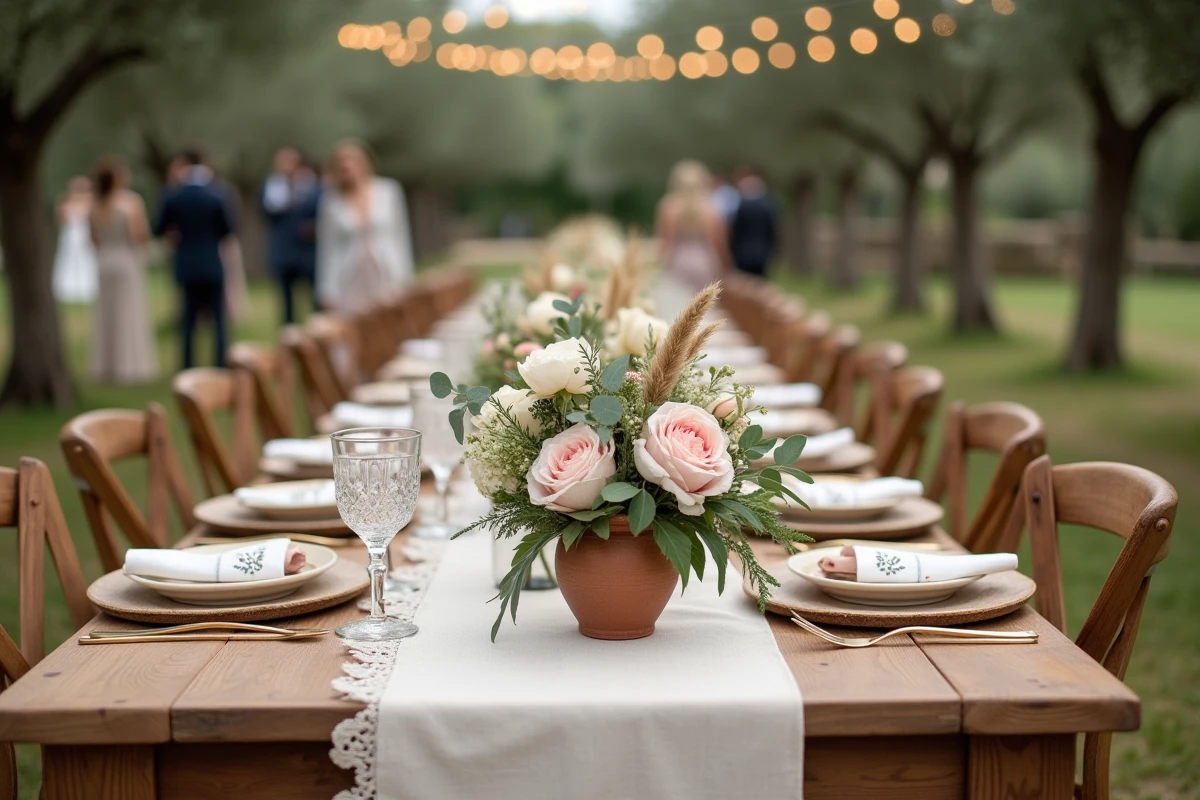
The civil ceremony continues to progress and establishes itself as a popular alternative for couples who wish to personalize their vows without a religious framework. In terms of decoration, the trends for 2025-2026 favor seasonal flowers, natural materials, and a minimalist approach that replaces decorative accumulation.
The most shared ideas on social networks revolve around the table: plant centerpieces, candles, linen tablecloths. The guiding thread is no longer the imposed theme (rustic, bohemian, vintage) but the visual coherence between the venue, the lighting, and a few carefully chosen elements.
Ultimately, organizing a wedding rests on three structural trade-offs: the format (number of guests and type of ceremony), the contract (flexibility clauses of providers), and the budget (allocation between fixed and variable items). Couples who resolve these three points in advance save time on everything else, including decoration and the honeymoon.